My $28 Wedding Guest Dress Came From a Thrift Store — Here's Exactly How I Found It
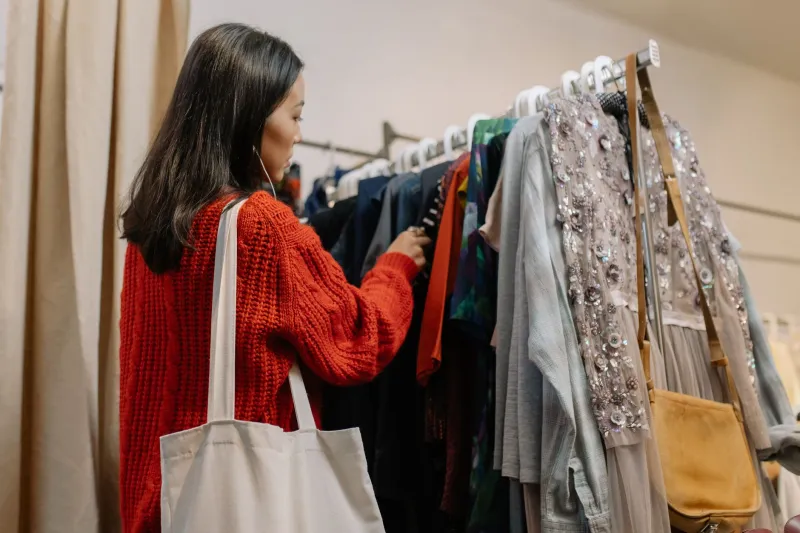
Let me set the scene: I got a wedding invitation in the mail, opened my closet, and immediately spiraled. Nothing felt right, and the dresses I actually wanted were all in the $200–$400 range. For an event that lasts five hours. Hard pass.
So I did what I always do when fast fashion disappoints me — I went thrifting. Two stores and one very caffeinated Saturday later, I walked out with a floor-length emerald gown for $28. The tags? Long gone. The compliments at the wedding? Endless. Three different people asked if it was Reformation. (It was not. It was somebody's donated bridesmaid dress from 2016, and it was thriving.)
Here's everything I've learned about scoring event dresses secondhand, because wedding season waits for no one.
Why Wedding Guest Dresses Are a Thrifting Goldmine
Here's the secret nobody talks about: formal wear is one of the most over-donated categories at thrift stores. People buy dresses for one event, wear them once (sometimes never, thanks to a cancelled shower or a plus-one situation that fell through), and drop them off within a season or two.
That means racks are quietly stuffed with:
- Never-worn bridesmaid dresses — often from pricier brands like Jenny Yoo or Show Me Your Mumu
- Tag-still-on cocktail dresses from Nordstrom, Anthropologie, and boutique labels
- Vintage gowns with construction quality you genuinely cannot find at today's price points
The fast-fashion version of my emerald gown would've been $89, made of that squeaky polyester that photographs terribly under reception lighting. Mine has a fully lined bodice, an invisible zipper, and a hem that falls like actual fabric. That's the difference.
What to Actually Search For on the Rack
Don't browse casually — thrift shopping rewards a strategy. Here's my filter system:
Color first, silhouette second. I scan for jewel tones and rich neutrals because they read expensive instantly. Skip anything in that shiny, thin jersey that screams 'forever 21 clearance.'
Feel the fabric before you look at the size. Run your hands along the rack. You're hunting for weight — lined bodices, real zippers, hems that aren't just serged. If it feels flimsy on the hanger, it'll look flimsy in photos. Size is fixable; quality is not.
Check the usual suspects for damage. Armpits, hemlines, and the lining around the zipper. Formal dresses get worn for exactly one sweaty night, so those are the hot spots. A tiny seam pull is fine — a stain on the bodice is a walk-away.
Think past the tag size. Thrifted formal wear often runs from old sizing systems or was altered for the original owner. A dress that's slightly too big is actually good news — it means room for tailoring.
The Tailoring Trick That Makes It Look Designer
This is the part that transforms a $28 find into a $280 look: budget $20–$40 for alterations and it changes everything.
My gown was a touch boxy through the waist, so I took it to a local tailor (search Google Maps for 'alterations' near you — most strip-mall dry cleaners do this too). She nipped the waist and adjusted the straps for $35. Total damage: $63 for a dress that fits like it was made for me. That's less than most fast-fashion 'occasion' dresses, and infinitely better made.
Priorities if you're only fixing one thing: the shoulder fit and the waist. Those two areas are what make a dress look custom versus borrowed.
Thrifted vs. Fast Fashion: The Honest Comparison
I've bought plenty of $70 fast-fashion dresses for weddings, so let's compare real talk:
- Cost: Thrifted plus tailoring usually lands $50–$80 total — right in line with a new dress from a mall brand, except the quality is often a tier above.
- Uniqueness: You will never, ever see someone else in your dress. At a 150-person wedding, that matters.
- Sustainability: One pre-loved dress versus another unit of synthetic fabric entering the world. Easy call.
- Effort: This is the real price. Thrifting takes time, patience, and a few unsuccessful trips. If you need a dress by Thursday, this isn't your move.
That last point is why I start hunting the moment spring invitations appear — usually February or March, before the rush hits the racks.
My Quick-Fire Checklist Before You Buy
- Hold it up in good light — check for stains, snags, and sun-faded spots
- Zip it (or step into it) over your clothes in the fitting room
- Check the lining and zipper function
- Picture it with shoes and jewelry you already own
- Ask yourself: would I pay full price for this if it were new? If yes, buy it
Wedding season is coming whether your closet is ready or not. Skip the frantic order-untry-return cycle this year and give the racks a chance first. Your Venmo, your photos, and the planet will all thank you — and someone at the reception will absolutely ask where you got your dress. I'll leave it to you whether you tell them the truth.